
By JuniorTheTruth™
The Conversation We Need to Have
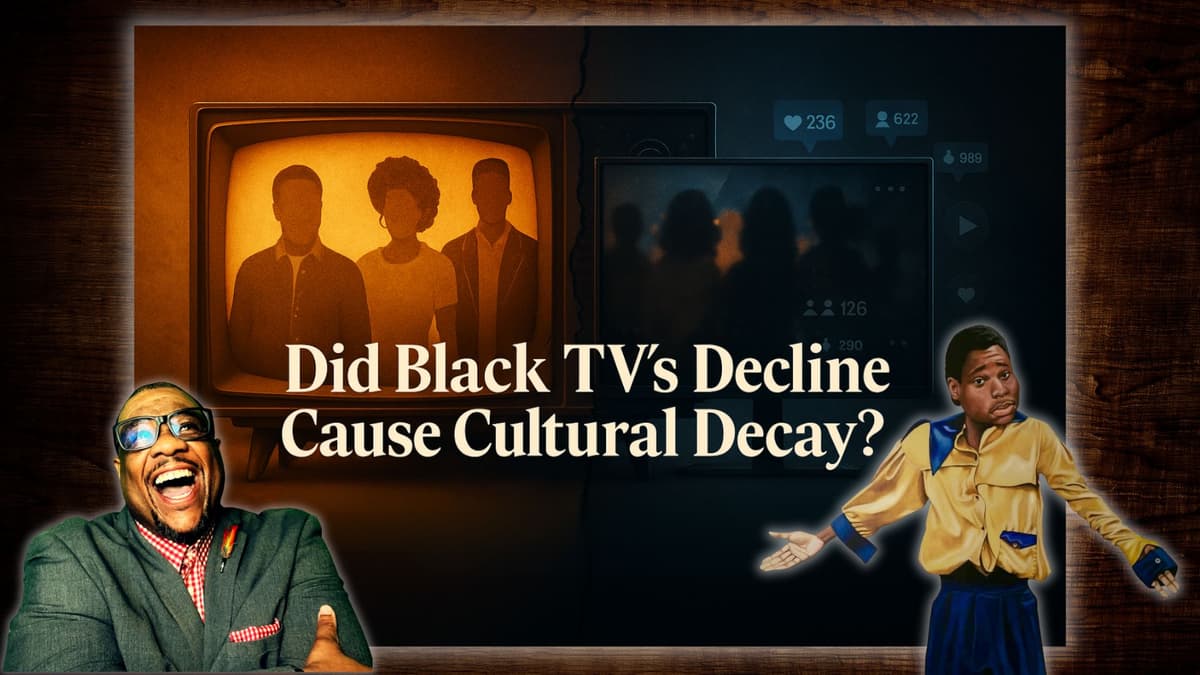
When we talk about The Culture, we can’t ignore the impact television once had on shaping how we saw ourselves — and how the world saw us.
For many of us, growing up in the 1980s and 1990s meant gathering around the TV with family to watch The Cosby Show, A Different World, Family Matters, The Fresh Prince of Bel-Air, and countless other Black-led shows.
These weren’t just sitcoms — they were cultural touchstones. They gave us multidimensional portrayals of Black life, where we saw lawyers, doctors, students, and whole families navigating life with humor, dignity, and intelligence.
Fast forward to today, and the question is worth asking:
Has the decline in the quality of Black television contributed to the cultural decay we see in our communities?
The Golden Era of Black TV
In the 1980s and 1990s, Black TV wasn’t just “on the air.” It was leading the culture.
The Cosby Show wasn’t just funny; it modeled a loving, educated Black family in a way that shattered stereotypes.
A Different World celebrated HBCUs and showed the value of higher education, ambition, and cultural pride.
227, Amen, and Frank’s Place gave us glimpses of Black neighborhoods, friendships, and challenges — with wit and depth.
These shows reinforced pride, inspired ambition, and served as a mirror to the very best of what our culture could be.
The Shift — What Changed After 2000
By the early 2000s, we began to see a shift. The number of high-quality Black-led sitcoms and dramas on major networks declined. Reality TV began dominating airwaves, and while streaming has brought new opportunities (Bel-Air, Harlem, The Upshaws), the mainstream influence and consistent quality we once saw is not the same.
This decline left a gap. And in that gap, many would argue, the cultural guardrails that television once helped maintain started to weaken.
The Link Between TV and Culture
Black television historically provided more than entertainment — it offered:
Role models who represented success, family values, and ambition.
Storylines that addressed real issues (racism, inequality, family challenges) with care.
Community connection — giving us shared cultural moments and positive points of reference.
When the quality of programming decreased, those consistent positive reinforcements became rare.
But Did the Decline in TV Cause Cultural Decay?
Here’s where the debate comes in.
From my seat, I’ll tell you this: Television alone didn’t cause our cultural decline.
The truth is, systemic issues — economic disparities, education inequities, systemic racism, and policy failures — have always been the primary factors shaping the quality of life for Black Americans.
But…
When the quality of our cultural storytelling dropped, we lost a powerful tool for reinforcing values, unity, and ambition. That loss matters.
Television as a Mirror
Television doesn’t just create culture — it reflects it.
In the 80s and 90s, the mirror reflected aspiration, dignity, and family.
In too much of today’s mainstream content, the mirror reflects conflict, dysfunction, and superficial values — often because that’s what gets clicks and views.
And if the mirror keeps reflecting only our most chaotic sides without balance, it reinforces an incomplete (and harmful) image of who we are — both to ourselves and to the world.
Modern Black TV — Bright Spots and Missed Opportunities
Let’s be clear: Black storytelling isn’t dead.
In 2024 alone, we’ve seen great work:
Bel-Air
Harlem
The Upshaws
All American
Tyler Perry’s Beauty in Black
The issue isn’t that there’s no good content — it’s that the mainstream cultural impact isn’t as strong or unified as it was in past decades. The shows don’t dominate the cultural conversation the way The Cosby Show or A Different World did.
JuniorTheTruth™’s Take
I believe the decline in the quality of Black television has played a role in our cultural decay. Not the only role — but a significant one.
Why? Because cultural reinforcement matters. Media has always been a powerful teacher. And when that teaching leans away from excellence, ambition, and unity — over time, we feel that loss.
So What Now?
If television is a mirror, we have two choices:
Keep letting someone else choose what our reflection looks like.
Take control of the narrative and create mirrors that reflect our highest selves again.
That’s where creators, networks, and even audiences have power. We can demand better storytelling. We can support the shows that represent us well. And we can recognize that representation isn’t just about being seen — it’s about what we are showing.
The Bigger Picture
The decline in quality Black television isn’t the root of cultural challenges, but it’s a reminder of this truth:
When we stop showing our greatness — to ourselves and to the world — we risk forgetting it.
If we want to reverse cultural decay, we can’t ignore the role of the media we consume, produce, and support.
Final Thought
Television didn’t create the challenges we face, but it can absolutely be part of the solution. We’ve seen it before. We can see it again.
The question is: Are we willing to demand a better reflection?
What do you think?
Has the decline in the quality of Black television influenced our culture and quality of life? Or is it just a reflection of deeper societal shifts?
Drop your thoughts in the comments. Let’s start the conversation.
🔥 Want more?
This discussion is pulled from Episode 2 of The Culture Collective ThoughtCast™. Watch the full episode here: [YouTube Link]